Technical Insights

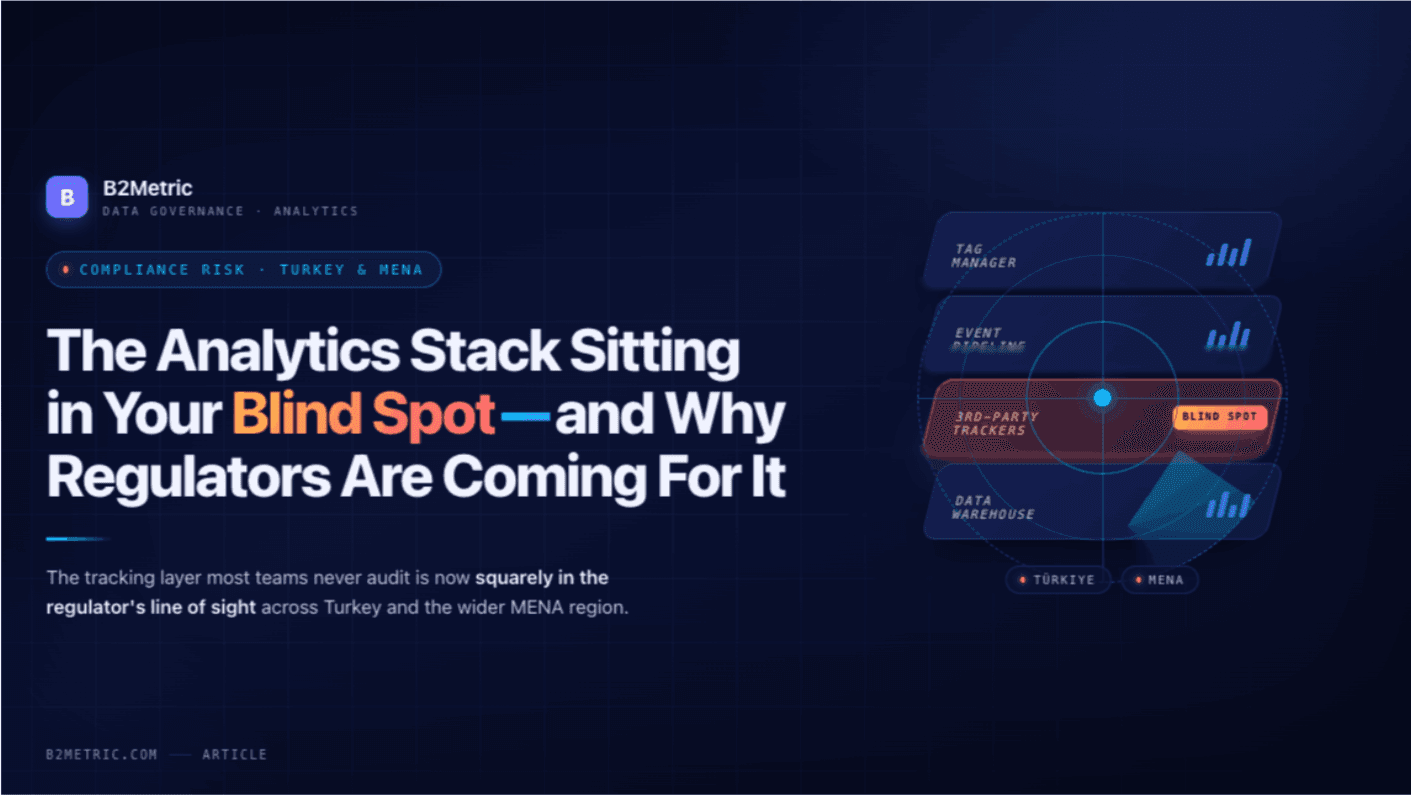
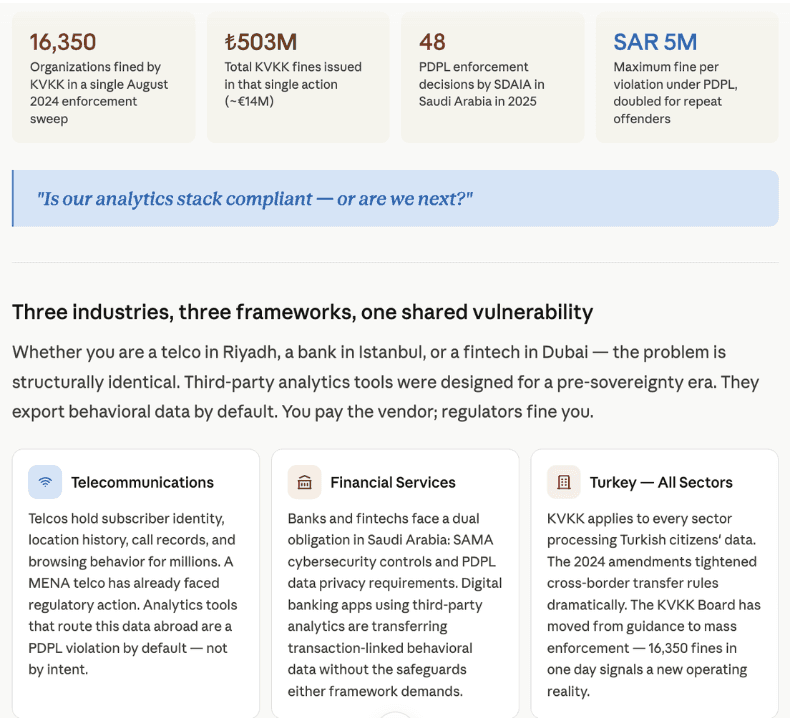
A telco in the region has already been sanctioned. Banks are under active review. And Turkey's KVKK authority just issued penalties to over 16,000 organizations in a single enforcement sweep. Here is what every enterprise needs to understand about the data they are exporting — and how to stop it.
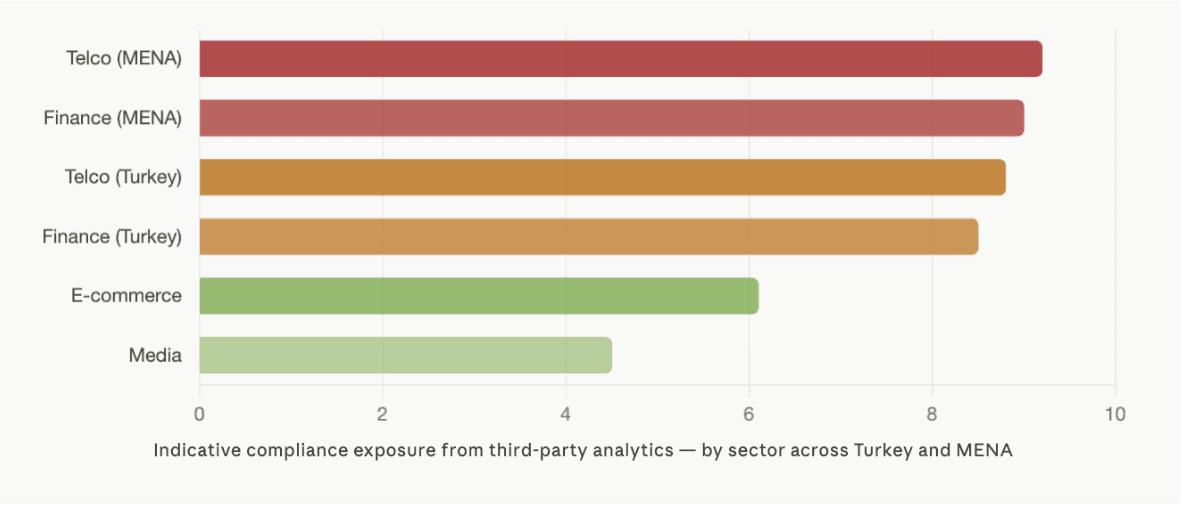
Regulatory enforcement on data privacy is no longer a distant concern in any of these markets. It is active, accelerating, and hitting industries that assumed their analytics infrastructure was invisible to regulators.
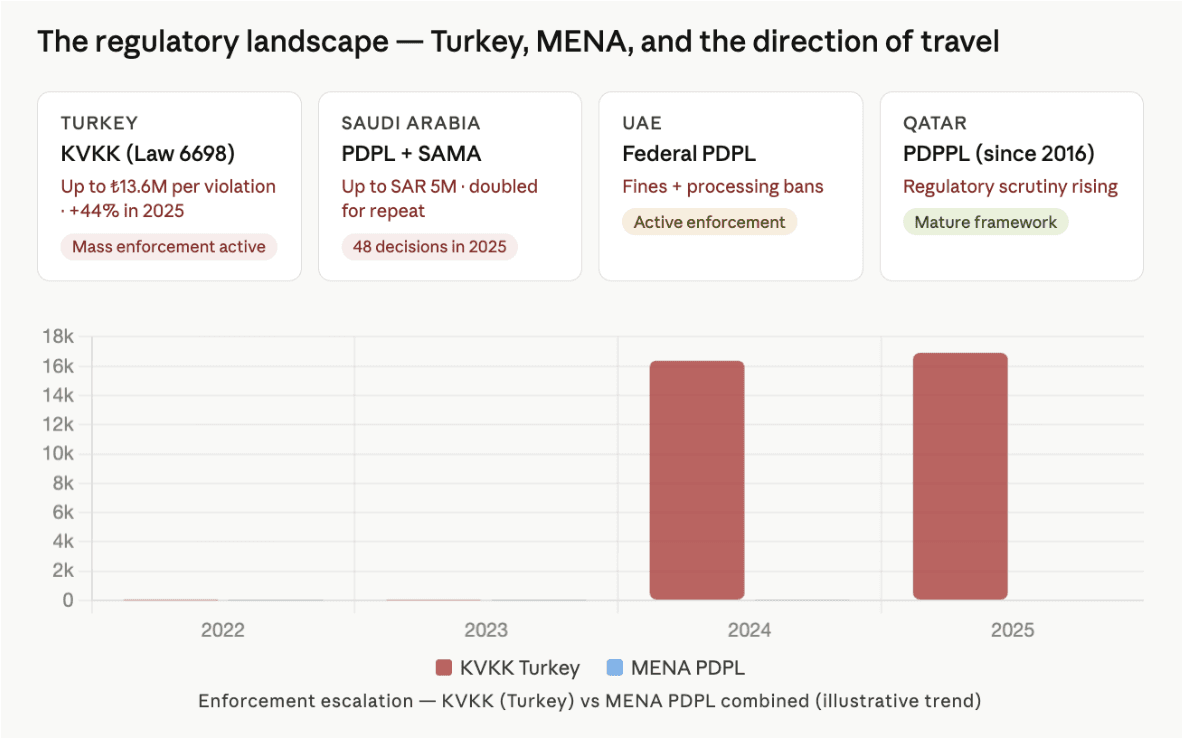
Three distinct legal frameworks — Turkey's KVKK, Saudi Arabia's PDPL, and the UAE's Federal PDPL — are now simultaneously in active enforcement. They differ in their specifics but share a common target: organizations that collect and export personal data through third-party platforms without adequate legal basis, consent architecture, or cross-border transfer safeguards.
Your analytics stack sits at the center of all three.
Turkey's KVKK: The Enforcement Has Arrived
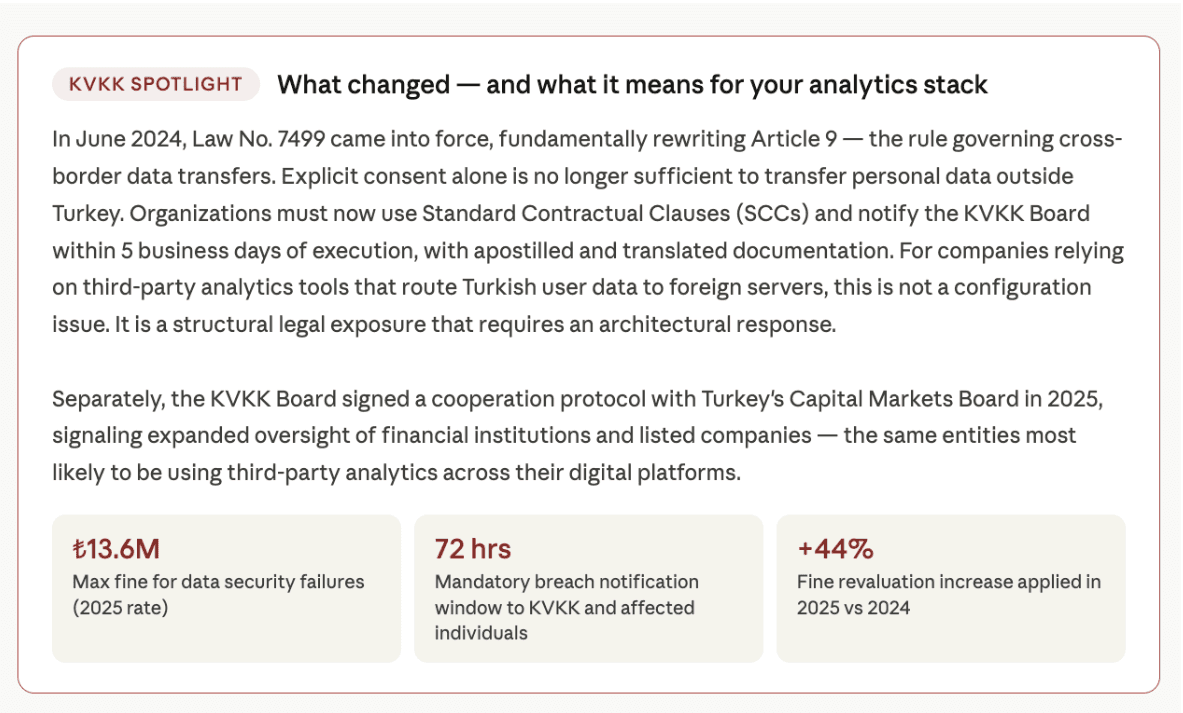
Turkey's Personal Data Protection Law has been in force since 2016, but many enterprises treated it as a compliance formality. That era ended in 2024 with a series of moves that transformed KVKK into one of the region's most active enforcement frameworks.
The KVKK Board has also moved against global technology companies — Meta and WhatsApp each received fines for VERBIS registration failures, and Twitch was fined for a data breach affecting Turkish users. The message is clear: no company is too large, and no violation is too technical to escape scrutiny.
Why Your Current Analytics Stack Is the Liability
The tools that dominate digital analytics were designed before data sovereignty existed as a legal concept. They export behavioral data by default, route it through foreign infrastructure, and leave the data controller — you — holding the regulatory exposure.
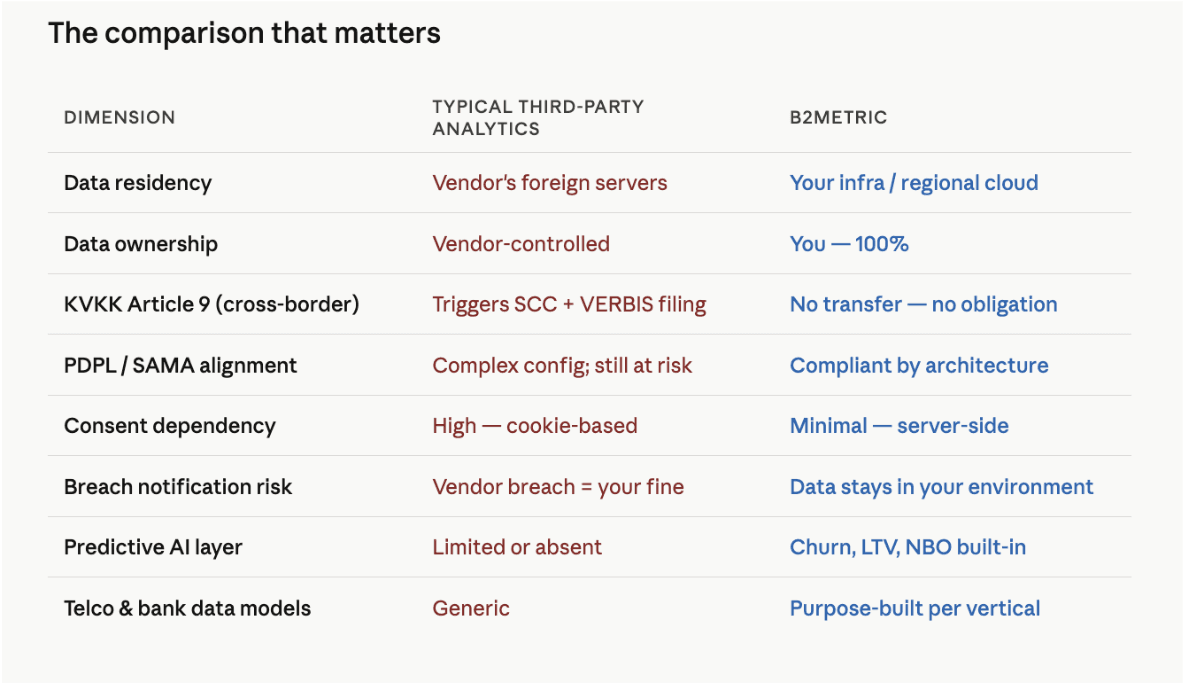
Data leaves your jurisdiction by default. Standard third-party analytics platforms transfer behavioral data — clicks, sessions, device IDs, location signals — to US or European servers. Under KVKK's amended Article 9, PDPL, and UAE PDPL, cross-border transfers require SCCs or adequacy determinations. Most standard configurations cannot demonstrate either.
You do not own the data. When data flows into a vendor's infrastructure, that vendor controls retention and processing rights. You are a data controller operating on someone else's terms — a legally precarious position under KVKK, PDPL, and SAMA alike.
Consent architecture is fragile. Cookie-based tracking requires explicit, granular consent. Most consent banners on Turkish, Saudi, and UAE enterprise sites do not meet the applicable standard. Regulators are actively testing sites — not waiting for complaints.
The VERBIS and SCC documentation burden is real. Under KVKK, every cross-border transfer must be backed by SCCs, notified to the KVKK Board within 5 business days, and filed with apostilled translations. Third-party analytics tools create dozens of these transfer events — silently, continuously, without documentation.
How B2Metric Solves This, Structurally
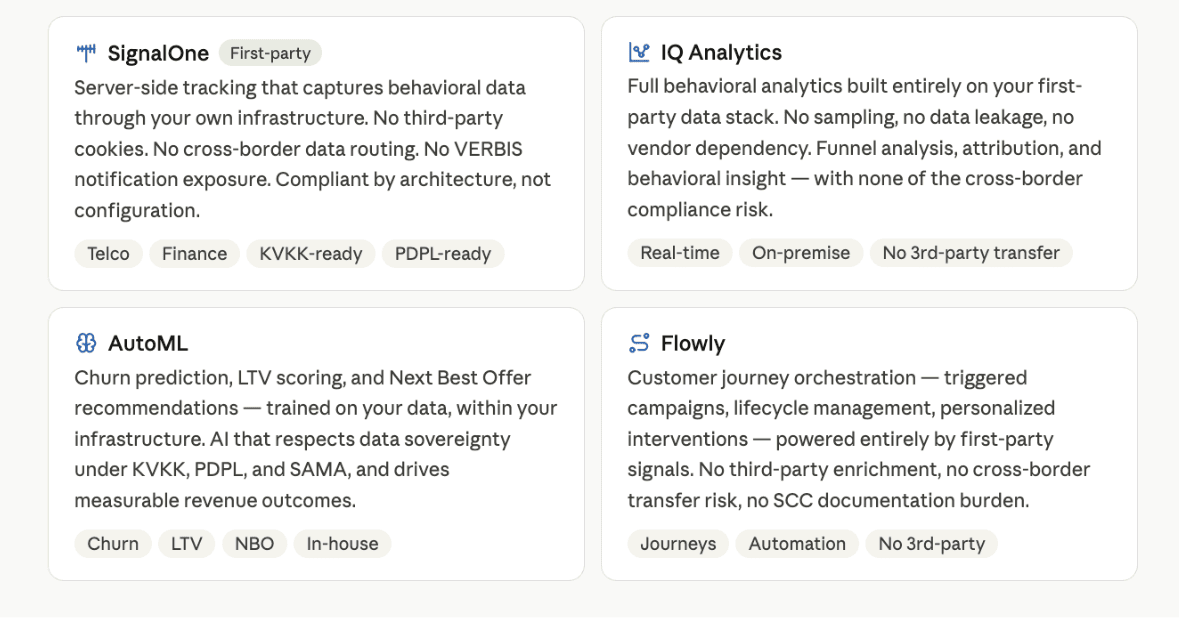
B2Metric's compliance architecture is not a configuration workaround. It is designed from first principles around data sovereignty: your data never leaves your environment without your explicit control, whether you are operating under KVKK in Istanbul, PDPL in Riyadh, or SAMA in any Gulf market.
The Boardroom Question
The MENA telco that received regulatory action did not set out to break the law. The 16,350 Turkish organizations fined by KVKK in August 2024 were not operating in bad faith. They deployed industry-standard tools, made standard assumptions, and moved on. That is exactly how compliance failures happen.
Turkey's KVKK moved from guidance to mass enforcement in under a year. Saudi Arabia's SDAIA issued 48 decisions within two years of full enforcement. The EU's experience shows where this trajectory ends: billions in cumulative fines and mandatory infrastructure overhauls under regulatory orders. Waiting for a fine to begin the process is the most expensive path available.
For telcos, banks, and digital enterprises in Turkey and across the GCC, the compliance window has not closed. It closed already.
B2Metric works with Türk Telekom, STC Kuwait, MetLife, and leading financial institutions across Turkey and MENA to replace risky third-party analytics infrastructure with compliant, predictive, first-party data platforms. The move is not just about avoiding fines. It is about building a data asset that regulators respect — and that actually makes your business smarter.